Showing posts with label #rules. Show all posts

Sunday, June 12, 2016

The Hateful Eight— Tarantino mailed it in


I like westerns and I like Quentin Tarantino films, so I had high expectation when I rented The Hateful Eight. Bummer. It's not only a crummy movie … punishment is compounded by its interminable length. Long is usually good for Tarantino, but it’s a bad sign if you ever consciously wonder when this thing will be over. The movie desperately needed editing by someone unintimidated by the grand master.

The Hateful Eight came across as a parody of a Tarantino movie instead of the genuine article. His good films are characterized by stylish cinematography, clever and incongruous banter, startling and extreme violence, and artful revelation of plot through time displacement. The Hateful Eight included all of these elements, but without charisma. It felt flat and uninspired. Tarantino dispassionately applied his formula without the artistic essentials that make it work.  Too bad. He’s tried twice to hit one out of the park with a western. Django Unchained was a ground-rule double, and he may have barely beat out an infield grounder with The Hateful Eight.

I have watched Pulp Fiction and the Kill Bill films many time. I’ve also re-watched other Tarantino movies. I can’t imagine spinning up The Hateful Eight again.

Thursday, September 3, 2015

The More Things Change ...

Western fiction


I moved to Omaha last year, so I found this 1877 article from the Omaha Herald interesting. For those who loath TSA, tiny seats, and surly airlines, take heart, travel was far worse in the good-ol’-days.

Here are a few of the Herald’s tips for stage travelers.
  • Don't growl at food stations; stage companies generally provide the best they can get.
  • Don't keep the stage waiting; many a virtuous man has lost his character by so doing.
  • Don't smoke a strong pipe inside especially early in the morning.
  • Spit on the leeward side of the coach.
  • If you have anything to take in a bottle, pass it around; a man who drinks by himself in such a case is lost to all human feeling.
  • Don't swear, nor lop over on your neighbor when sleeping.
  • Don't ask how far it is to the next station until you get there.
  • Never attempt to fire a gun or pistol while on the road, it may frighten the team; and the careless handling and cocking of the weapon makes nervous people nervous.
  • Don't discuss politics or religion, nor point out places on the road where horrible murders have been committed.
  • Don't linger too long at the pewter wash basin at the station.
  • Don't grease you hair before starting or dust will stick there in sufficient quantities to make a respectable 'tater' patch.
  • Tie a silk handkerchief around your neck to keep out dust and prevent sunburns. A little glycerin is good in case of chapped hands.
The article ended with a good piece of advice for modern travelers.
Don't imagine for a moment you are going on a picnic; expect annoyance, discomfort and some hardships. If you are disappointed, thank heaven.
I thank heaven every time I'm not seated next to Del Griffith!


Monday, July 20, 2015

Writing Tips from Ernest Hemingway

fiction writing celebrity author


Hemingway never published advice for aspiring writers, but he spoke or wrote enough about writing that Larry W. Phillips was able to edit a collection of his reflections on the craft. (Ernest Hemingway on Writing)

In the preface, Phillips writes, “Throughout Hemingway’s career as a writer, he maintained that it was bad luck to talk about writing—that it takes off ‘whatever butterflies have on their wings and the arrangement of hawk’s feathers if you show it or talk about it.’ Despite this belief, by the end of his life he had done just what he intended not to do. In his novels and stories, in letters to editors, friends, fellow artists, and critics, in interviews and in commissioned articles on the subject, Hemingway wrote often about writing.”

Here’s one piece of advice I like:

Hemingway said to F. Scott Fitzgerald that, “I write one page of masterpiece to ninety-one pages of shit. I try to put the shit in the wastebasket.”

This nugget reminds me of a photography course I took many years ago with my wife. (She got an A while I received only a B. Darn. And we took pictures of the same subjects.) Anyway, the teacher told us if we wanted to build a reputation as good photographer, we should take lots and lots of pictures and throw all of the bad ones away. Simple … but expensive in the age of film photography. In the digital age, this advice has become cost free. If adhered to religiously, this technique allows a visual dufus like me to catch up with my wife.

Here are some more tips gleaned from Hemingway lifelong musings about writing.
  • Use short sentences.
  • Use short first paragraphs.
  • Use vigorous English.
  • Be positive, not negative.
  • To get started, write one true sentence.
  • Always stop for the day while you still know what will happen next.
  • Never think about the story when you’re not working.
  • Don’t describe an emotion–make it.
  • Be Brief.
  • The first draft of everything is shit.
  • Prose is architecture, not interior decoration.
  • Write drunk, edit sober.

If you’re inclined, there’s even an app that will measure your writing clarity against Hemingway. I’m not one for machine assisted writing tools, but at $9.99, this one seems inexpensive. I bought it and tried it out on this post. It received a “good” score. Ironically, the quote from Larry W. Phillips was highlighted as the least comprehensible.  

Wednesday, July 1, 2015

Characters Matter

Characterization is a crucial aspect of fiction. We know this because it's drilled into us at school, in workshops, and in all the how-to books and journals we read. The protagonist must come across as real and interesting enough to pull the reader all the way through to the end of the story. A common mistake, however, is to focus too much attention on the protagonist. When you read a great book or watch an outstanding film, it's usually the antagonist that lifts the story above the ordinary.
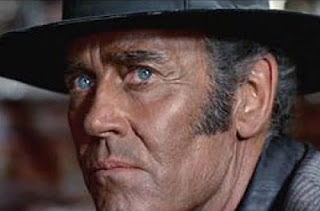
Sergio Leone Spaghetti Western film
A favorite villain: Frank in Once Upon a Time in the West
Protagonists, especially those of the heroic breed, are bound by rules and common perceptions that somewhat inhibit creativity. Antagonists, on the other hand, are wide open for manipulation. They can be bad to the bone like Hannibal Lector or Chigurh. They can be nasty or evil, but mend their wayward ways like Ebenezer Scrooge or Darth Vader. The reader may be misdirected to believe the antagonist is bad and then everything is flipped around like with Boo Radley and Mr. Darcy. 
Antagonists can make a story memorable even when they are not even human, like Moby Dick or Christine. The one thing these antagonists all have in common is great character development.

Concentration on character development shouldn't stop with the protagonist and antagonist. Nobody willingly hangs around with boring people and nobody wants to read about characters with cornmeal personalities—not even the bit players. Everybody inside the covers of your book has to be interesting. Give each of them a distinct personality. If you have a character like a postman or waitress that appears only for a couple pages, don't slow down the story by describing their personality, show it. You need to do it with dress, movement, or dialogue. Show, don't tell, is more difficult with the brevity of a minor player, but you only need to spice the character enough to make him or her three dimensional.

A fictional work has a single writer with a single personality. If you populate your work with slight variations of yourself, you'll create a homogeneous universe that will bore people silly. A writer must suppress their own personality when developing characters so they are all different from each other. It's not enough that they look and talk different—they must think and act differently. They must be different people.

The fiction writer's personality will show up in the total work, but it's best if it's not directly reflected in the characters, especially the protagonist or antagonist. Have fun with these two. Make them unique from yourself and every other character in your work. This is especially true for the antagonist. 

A really good bad guy or gal gives a hero a reason to be heroic.


Monday, June 22, 2015

9 Golden rules for the Road Runner and Coyote

cartoons humor, film hollywood

Chuck Jones created 9 Golden rules for the Road Runner cartoons. These famous rules insured that fans received exactly what they expected from these Loony Tunes characters. First the rules, and then some storytelling lessons we can draw from this popular series. 
Rule 1. The Road Runner cannot harm the coyote except by going “beep, beep!”
Rule 2. No outside force can harm the coyote—only his own ineptitude or the failure of the Acme products
Rule 3. The coyote can stop anytime—if he were not a fanatic. (Repeat: “A fanatic is one who redoubles his efforts when he has forgotten his aim.” George Santayana)
Rule 4. No dialogue ever, except “Beep Beep!”
Rule 5. The Road Runner must stay on the road—otherwise logically he would not be called Road Runner.
Rule 6. All action must be confined to the natural environment of the two characters—the Southwest American desert.
Rule 7. All material, tools, weapons, or mechanical conveniences must be obtained from the Acme Corporation.
Rule 8. Whenever possible, make gravity the coyote’s greatest enemy.
Rule 9. The coyote is always more humiliated than harmed by his failures.

writing tips television and hollywood
Chuck's handwritten rules


Previously, I published the 7 rules for the television series Bonanza. Television series, movie franchises, and even cartoons need a list of dos and don’ts so the characters and action remain consistency from episode to episode. Book series need the same. The protagonist must remain true to his or her character and the plot cannot go too far afield without losing fans. If you write a series, or even a single novel, write down the plot and character rules. This little exercise brings clarity and dependability to stories.


There are additional lessons to be gleaned from the Road Runner and Coyote. All stories revolve around an antagonist making life difficult for the protagonist. Different stories can have a multiple number of one or the other. Although Steve Dancy is the main protagonist in my Western novels, he has two (and now three) characters in secondary protagonist roles. Multiple bad guys or gals are also not uncommon. 

Warner Bros. Loony TunesAfter these main characters, the entire story is usually populated with all sorts of supporting and bit players. What if we were to whittle this down to the bare essentials? Could a story be told in a world populated by only one protagonist relentlessly pursued by a single antagonist? Steven Spielberg’s first movie Duel meets this criteria, as well as Tom Hanks’ Cast Away. These are intimate, tense stories. Of course, the Road Runner cartoons fits this minimalist construct. In fact, the Road Runner has no dialogue except for a single word repeated twice.

How in the world can you keep audience interest with these limitations? Watch. You’ll see storytelling reduced to its barest elements. Even if you have a cast of thousands, you can keep the reader’s interest by following the precepts displayed so eloquently by Road Runner cartoons. 


cartoons and old hollywood storytelling

Sunday, June 14, 2015

People Love That Story

storytelling by an expert storyteller
Kurt Vonnegut

I'm collecting writing tips from famous author's. You can read them here. In this post, I'm adding Kurt Vonnegut’s writing tips. Good advice from an expert storyteller. 

Although I posted it before, I also wanted to share his amusing description of story forms. Behind the entertaining presentation, Kurt presents some solid analysis of the art of storytelling. So if you want to hear it from the horses mouth, watch the video below. 

Here are Kurt Vonnegut’s "8 Tips on How to Write a Great Story."
  1. Use the time of a total stranger in such a way that he or she will not feel the time was wasted.
  2. Give the reader at least one character he or she can root for.
  3. Every character should want something, even if it is only a glass of water.
  4. Every sentence must do one of two things — reveal character or advance the action.
  5. Start as close to the end as possible.
  6. Be a Sadist. No matter how sweet and innocent your leading characters, make awful things happen to them-in order that the reader may see what they are made of.
  7. Write to please just one person. If you open a window and make love to the world, so to speak, your story will get pneumonia.
  8. Give your readers as much information as possible as soon as possible. To hell with suspense. Readers should have such complete understanding of what is going on, where and why, that they could finish the story themselves, should cockroaches eat the last few pages.


Wednesday, February 4, 2015

Too much information

Honest westerns filled with dishonest characters.


Speed bumps take readers out of the story.

The final throes of revising Jenny’s Revenge reminded me that too much information doesn't help a story. Nothing bores a reader more than needless explanations about trivial matters the reader can fill in for themselves. Pointless factoids, excessive description, and extraneous words make an otherwise good novel clunky and laborious. 

This old lesson has special application to my writing because I have a need to neatly tie up every little thing. My brain somehow requires an explanation for every action by every character. This is important for the main plot, but can be distracting when it comes to tributaries. In fact, some tributaries can turn the plotline into a muddy mess. I also have a habit of siring orphans. In an initial draft, I'll launch a subplot, never to return to it. Most readers may not remember the distraction, but the dead end will irritate those that do. More often than not, I find a simple solution: send the orphan to the bit bucket. 

My goal during revision is to cut everything that doesn’t move the story forward. Goals aren’t always achieved, so it helps to have trusted critics that will give you honest feedback. Revision is not an event, but a process that encompasses several iterations.

This is why I believe good novels are not written, they’re rewritten.