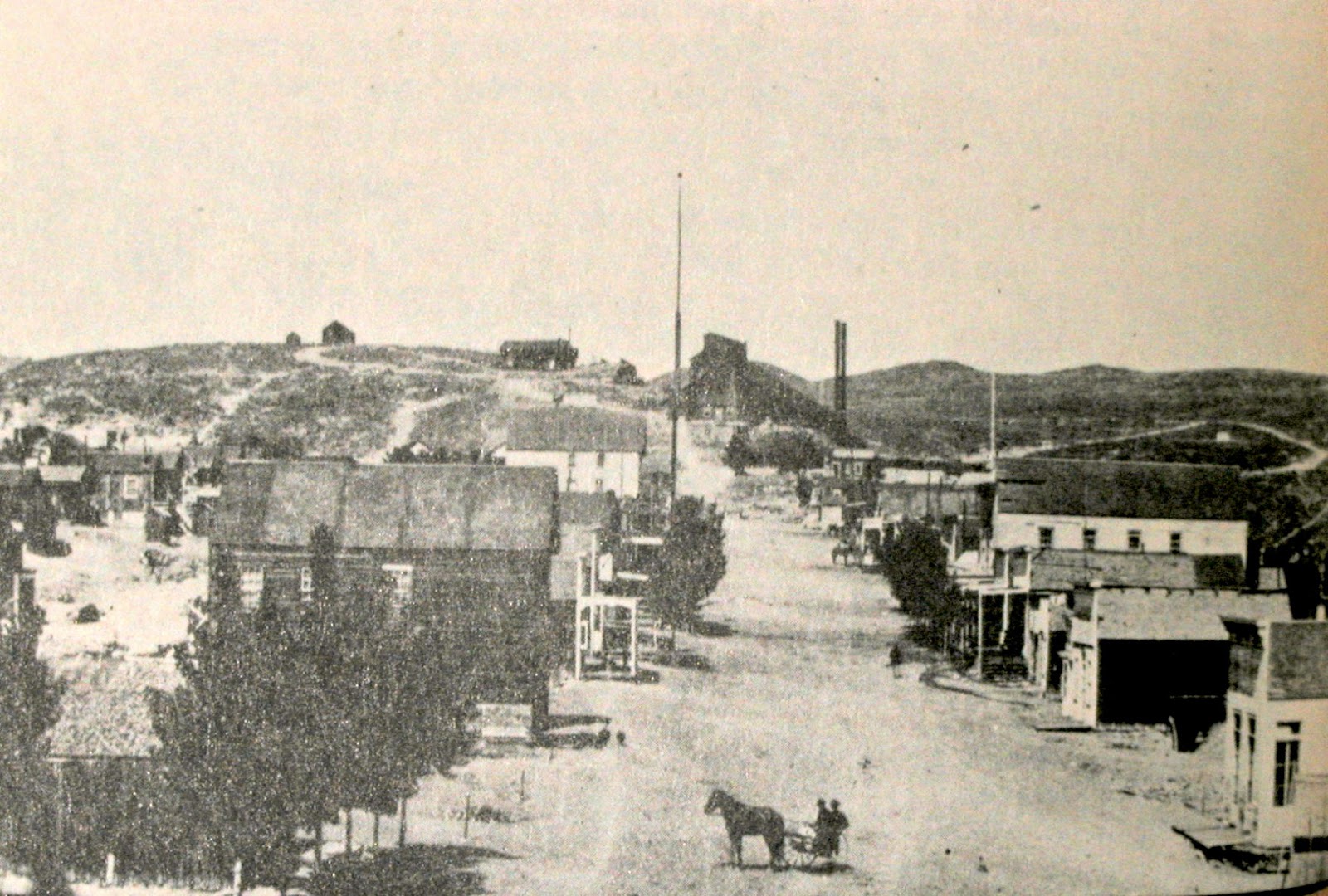
Showing posts with label #expeditions. Show all posts

Monday, August 7, 2017

no rules, no fences, no referees

Recently I tweeted an article I wrote about the Old West. Many people have weighed in on what the American frontier was really about. I think many miss a key point which, at least in a literary sense, ties Westerns, Science Fiction, and Fantasy together.

Here's one paragraph from my article, “Is the Mythology of the Old West Dead?”  . 
“The West, outer space, the future, or a make-believe land represents a new beginning in a fresh place away from home—the shrugging off of disappointments and a chance to start all over again. The romance and adventure of frontiers draws people desperate to escape the travail of their current existence. We've seen this in real life with the migrations to the New World and the Old West, but today many people satisfy this longing vicariously with fiction. If you're poor, your family makes you miserable, you've committed an act that offends society, or wanderlust has gripped you, then the adventure and limitless opportunity of a frontier beckons like a siren's call. Emigrating to a frontier means you get a do-over in a land with no rules, no fences, no referees.” 

Monday, August 22, 2016

A Travel Memoir—Partie Deux


Yesterday my wife and I left Paris for Omaha. That’s not a sentence most people would enjoy writing, but we’ve been gone a month and look forward to our home and dullish routines. Twenty-five years ago I was in Paris nearly every month and my wife often accompanied me. She did the museums, cathedrals and other large buildings. I worked. I enjoyed interacting with the French in a non-tourist setting and kidded my wife that she did dead France while I did live France.
This trip we focused on dead France … and walking. Museums and walking. Cathedrals and walking. Monuments and walking. Walking to find new and interesting places to eat. Sometimes just walking to watch the street life. But if you placed all of our steps end to end, you still wouldn’t reach a Brasserie-free zone. How cool is that!
We noticed a couple of differences from twenty-five years ago. For one thing, tourism isn’t nearly as easy or enjoyable. Terrorists and technologists put a dampener on the fun.


Security is everywhere. And I mean tough, no nonsense soldiers, not our clock-watching TSA gatekeepers. These decked out fully armed men and women strode purposefully in urban warfare formation. They never stopped. They never quit looking around. They never acted friendly.
Every public place included security checkpoints. In most cases, this meant two lines; one to check your bags and another for tickets. Standing line could wear you out before you got the first glance at a historic artifact. Worse, everything was cordoned off. No more grand vistas of the Eiffel Tower. The base is surrounded by barricades and open space under the tower is the province of black and white photographs from the pre-digital age. Notre Dame is still free, but a glacial line to get through security can consume the entire forecourt. If you’re a millennial, you think this is normal. How terribly sad.


Technologist have spoiled the party as well. Everybody born after the breakup of the Beatles has a selfie stick and insists on recording every moment of their lives. It’s as if they can’t enjoy life in the moment. They must see a digital representation to believe it’s real. And they can’t just snap their picture and get on with it. They wield their selfie stick like a baton, twirl it, shove it in other people’s faces, or just endlessly hold up traffic as they preen and mug for the perfect shot to share with the world on Instagram. Everybody is a celebrity in their own mind.
In the olden days, read the distant Twentieth Century, single-purpose cameras took photographs on expensive film that took more coin to develop and print. It also cost far too much to make a copy for everyone on the planet. Tourists stood away from the object of interest, took their picture, and moved on. That meant Kodak Moments seldom disrupted your enjoyment of a world wonder. Not today. People crowd forward so they can shoot backwards while claiming an arc of free space by waving a plastic stick with all of the authority of a scepter. Digital is free, everyone has a device, and spreading copies to people you don’t know is de rigueur. Pity the poor soul who just wants to feast on an exhibit with their eyes and ears.
These inconveniences were restricted to tourist attractions. Our small hotel in a pleasant neighborhood had all the charm of the Paris we knew twenty-five years ago. We were nestled on a quiet side street, with tiny grocery stores, casual cafés, fine dining, with trendy shopping, Metro stations, and bustling Parisians just steps away.
We had a wonderful time. Actually, our first visit was thirty-five years ago. At the time, we had never been anyplace more exotic than Tijuana. On our first night, we walked out of our Left Bank hotel and wandered down the street to a restaurant. We had no idea how to order. We knew no French. The waiters knew no English. We were so naïve, we ordered entrées as our main course. We had accidentally chosen La Coupole, the most famous and historic restaurant on all of the Left Bank. The whole experience was fun as hell, and it had a lot to do with our penchant for travel ever since. We were again in Paris for our fiftieth anniversary, so we decided to celebrate our grand night at La Coupole. It was fun. The food was great. The waiters charming. And best of all, the ghosts of all those famous artists and writers joined us in celebration of our first fifty years together.
Viva la France.
P.S: I write this from New York City, not Omaha. Our flight was cancelled. My last post (Planes, Trains, and Automobiles) bewailed our travel mishaps getting to New York. Evidently our travel hobgoblin has returned.

Wednesday, May 18, 2016

Back From a Fun Trip to Peru

My wife's photo of Machu Picchu

I like traveling to places my wife and I both enjoy. She loves history and art, while I prefer to see how people in other countries live today. This makes Egypt and China two of our favorite destinations because she can gaze in wonder at the pyramids or walk the Great Wall, and I get to witness a completely different culture.

Peru falls into this category. The 14th Century Inca ruins fulfill her need to touch and feel a culture long gone, and I get to enjoy the lively and complex Peru of today. I kidded her by saying she liked dead Peru, while I liked live Peru. That's an over-simplification, of course, but it's not too far off the mark.

Another Peruvian benefit is plenty of exercise ... at high altitude. When I got back to sea level I felt energized with all that oxygen.


Peru was wonderful. Friendly people who know how to preserve their heritage.


Oh well, vacation's over. Better get back to writing.


Wednesday, April 13, 2016

A genuine Westerner?


I believe Mark Twain is the greatest western writer of all time. Not only did Tom and Huck live on the frontier, but Roughing It describes his own adventures in the Wild West, including his stint as a reporter in Virginia City when it was wilder than any cow town on Saturday night. Twain thought the West was a hoot, so he kept traveling in that direction until he reached the Hawaiian Islands. In 1866, he spent four months in paradise as a reporter for the Sacramento Union.


Here are a couple of things Mark Twain said about Hawaii.
This is the most magnificent, balmy atmosphere in the world--ought to take dead men out of grave.
The missionaries braved a thousand privations to come and make them permanently miserable by telling them how beautiful and how blissful a place heaven is, and how nearly impossible it is to get there.

Thursday, July 30, 2015

Yale University and Omaha Disagree

westward ho
Pioneer Courage Park, Omaha Nebraska

Amy Athey McDonald has published an article in Yale News titled: On gunfights, U.S. colonialism, and studying the American West on the East Coast. The article includes an interview with John Mack Faragher, the Howard R. Lamar Professor of History and American Studies, and director of the Howard R. Lamar Center for the Study of Frontiers and Borders.

The Lamar Center site has a nifty feature which displays a different student’s dissertation blurb every time you refresh the screen. (You can actually catch gems like this: “I seek to foreground these events as a historical pivot point during which North American and global geopolitics, British-American relations, and both “American” and “Canadian” native peoples’ status and territorial control hinged on seemingly peripheral people, movements, and landscapes.”)

It’s nice to see the American frontier get some attention, but I’m not an enthusiast for the tone of the article or the Howard R. Lamar Center. If you don’t want to take the time to read the article or visit the site, I can summarize the content of both in a few words—pioneers wore black hats.

Professor Faragher said in the interview, “As I insist with my students, for every community founded in the American West, imagine that one was destroyed, and people killed, removed, or pushed aside.”

Pioneer Courage Park, Omaha Nebraska
He lost me right there. When I read that sentence I heard Professor Faragher say he wanted no uplifting messages about the frontier spirit. If his students persisted, then he insisted that they balance their dissertation by showing how pioneers despoiled all that was good and decent in the Americas. I object to using deplorable acts of others to claim higher moral ground for oneself, especially when that person is removed from the transgressor by time and distance.


He says, “The best side of our history is the attempt to form a just society out of our less than promising beginnings.” In other words, we started poorly, but if we learn from our disreputable past we can fix our society so it is just. 

We started better than any other nation in history. How many civilizations had a chance to start fresh and declared with their first free breath that, “We hold these truths to be self-evident, that all men are created equal, that they are endowed by their Creator with certain unalienable Rights, that among these are Life, Liberty and the pursuit of Happiness.” Granted, the words were aspirational—still are—but what other collection of people defined such a precise and idealistic goal for themselves. Just because we struggle to act in accordance with this lofty goal is no reason to vilify ourselves.

Pioneer Courage Park, Omaha Nebraska

I believe all people are the same. The same virtues, the same flaws. I came to this conclusion early in life from reading the Bible. It occurred to me that human frailties have not changed in thousands of years. Races and countries and clans are not noble. Collections of people cannot be consistently honorable. Individuals, however, can be noble, but more likely they perform noble acts in what might otherwise be an ignoble life.

There is no excuse for appalling acts by politicians, soldiers, and settlers. But to emphasize the negative over the courageous and honorable actions of most pioneers is not the path to a just society. We must look honestly at our past, but also see the brave and stalwart souls who struggled to make this a better world.

Man cannot be made perfect, but he can be inspired to lean toward his better nature. 

Monday, February 23, 2015

Ski Slopes and Ghosts Galore


I just returned from a week of skiing at Heavenly overlooking Lake Tahoe. Judging by the price of lift tickets, there’s gold on them thar hills. Warren Miller used to say your knees had only so many bends, so you might as well spend them skiing. I agree, but we needed a day to rest up after racing down slope after slope to get our money’s worth, so we took a day trip to the ghost town of Bodie, California.

western fiction
Bodie, California

If you really want to feel a ghost town, I suggest you visit one in the dead of winter. We had the fortune of exploring Bodie on a clear day, with no snow on the ground, and temperatures in the mid-sixties. We had the unearthly emptiness all to ourselves. Eerie.

wild west, old west, mining history
Bodie General Store
Western ghost town
Bodie General Store


Waterman S. Body discovered gold at this remote location in 1859, but the real heyday for the  Bodie mining camp occurred in the late 1870s and early 1880s. According to the guidebook, “By 1879 Bodie boasted a population of about 10,000 and was second to none for wickedness, badmen, and ‘the worst climate out of doors.’ One little girl, whose family was taking her to the remote and infamous town, wrote in her diary: ‘Goodbye God, I’m going to Bodie.’”

Restrooms closed for the winter,
so we had to go native

I like ghost towns, especially when allowed to explore on my own. You can learn a lot about how people lived in bygone days. Bodie has fairly intact homes, churches, a general store, school, barber’s shop, fire house, a hotel with restaurant, and saloons aplenty. The gymnasium equipment includes a punching bag, pull-up bar, weights, and other paraphernalia. One of the biggest and most impressive buildings is a miner’s union hall. All this with nary a ranger in sight ... at least not one away from the comfort of his vehicle in the parking lot.


The next day we returned to Heavenly. Unfortunately, we didn’t have this particular mountain to ourselves. Lots of people, loads of people, all zipping around unaware of the poor ghosts eager for callers just a couple of hours down the road.


My favorite ghost town is Candelaria, Nevada, the opening location for The Shopkeeper. In the book, I called the town Pickhandle Gulch, which was actually a suburb of Caldelaria.

Western fiction, action, adventure
Candelaria, Nevada
(aka Pickhandle Gulch)
bestselling western fiction
Author photo of Candelaria

Monday, January 19, 2015

Escape from Death Valley


Death Valley is the hottest place on earth. The valley has amiable place names like Dead Man’s Pass, Funeral Mountain, Coffin Canyon, Hell’s Gate, Devil’s Hole, Suicide Pass, and my favoriteDripping Blood Cliffs. This is rugged terrain. Or, as a local newspaper reported in 1907, "it has all the advantages of Hell without the inconveniences."

It’s even true that you can fry an egg on the sidewalk, but the rangers are tired of cleaning up the mess and suggest tourists instead fry their eggs on the hood of their car.

Good thing for us that it’s January. The daytime temperature only reached the mid-seventies and nighttime required a sweatshirt, a large fire, and a beverage suitable for sipping. We had a great time and I learned quite a bit about the region.

Everyone loves the story of Walter Scott, known far and wide as Death Valley Scotty. Scotty was a flimflam man who despite being discover as a fraud, successfully ingratiated himself to his rich mark, a man named Albert Mussey Johnson. Johnson was so enthralled with the con man that he supported Scotty for the remainder of his long life. Scotty told great stories and entertained the Johnsons and their innumerable guests. Most people conclude that if you’re glib enough the world is your oyster. I took away a different lesson. As a cast member of Buffalo Bill’s Wild West Show, Scotty knew the lure of Western mythos. Johnson, on the other hand, was a longtime wannabe cowboy. Scotty didn’t just tell stories, he delivered the Old West right into Johnson’s Death Valley parlor.


The whole episode reminded me of the western frontier's power of renewal. The chance to start a new life is the real reason tens of thousands abandoned their home for the Old West.  Here’s a quote from an Article I wrote a few years ago: Is the Mythology of the Old West Dead?
“The West, outer space, the future, or a make-believe land represents a new beginning in a fresh place away from home-the shrugging off of disappointments and a chance to start all over again. The romance and adventure of frontiers draws people desperate to escape the travails of their current existence. We've seen this in real life with the migrations to the New World and the Old West, but today many people satisfy this longing vicariously with fiction. If you're poor, your family makes you miserable, you've committed an act that offends society, or wanderlust has gripped you, then the adventure and limitless opportunity of a frontier beckons like a siren's call. Emigrating to a frontier means you get a do-over in a land with no rules, no fences, no referees.”
To me, this is the real lesson from Walter Scott and Albert Johnson. Johnson had been diagnosed to die young and had lived his life indoors accumulating wealth as a Chicago businessman. He loved the idea of a Wild West and Scotty delivered it for him. In addition, the dryness of Death Valley gave him a longer life and relief from his incessant pain. Of course, Johnson built his homeScotty’s Castlewith all the citified luxuries of the early twentieth century. Scotty's Castle was both a mirage and oasis safely tucked away in a barren wilderness.

As John Wayne said, “The fascination that the Old West has will never die."

Friday, October 24, 2014

Mobridge, South Dakota … Sitting Bull, Fry Bread Tacos, and Pheasants

Mobridge, South Dakota

Mobridge, South Dakota takes it name from the first railroad bridge to cross the Missouri. The town draws tourists in October like Times Square draws merrymakers on New Year’s Eve. Okay, maybe that’s a slight exaggeration, but there were a lot of people in Mobridge this past week dressed in see-me-now-orange. I was one of those revelers. I drove up from Nebraska to visit friends, hunt pheasants, and eat fry bread tacos.

Hunting pheasants in South Dakota is a team sport. A couple of blockers sit at one end of a field as an orange-clad army chases the birds toward them. When one or more of the birds take flight, everybody becomes sex obsessed. A license allows you to hunt roosters, so the first order of business is to determine the sex of a bird flying as fast as its wings will carry it. This is why everybody upon seeing a bird shouts out the gender. The more nebulous cry of “Bird up,” puts the onus on the shooter. If this isn’t difficult enough, sometimes a rooster takes flight with his entire harem. You could call him cowardly for hiding behind hens, but it’s not exactly a bird-brained tactic.

Fry Bread Taco

The scent of fry bread tacos makes your mouth water as soon as you enter Mobridge. These gigacalorie indulgences possess every unhealthy food group known to man. Woof them down with a sugary soda and you taste heaven … except I’m told that in heaven, fry bread tacos are not sinful.

Our hunting party took up six cabins along the bank of the Missouri. All good friends and relatives. Each cabin included a tiny cooking space generously called a kitchen in the glossy brochure. The stove top tilted, the refrigerator squealed all night long, and microwave had enough power to boil a cup of water in under ten minutes. We crammed twenty people into an already overheated cabin to eat homemade meals on mismatched dishes. I’ve never had so much fun.

I also found time to visit Sitting Bull’s gravesite … or perhaps not. In 1953, a bunch of drunks crept up to Fort Yates, North Dakota, and mistakenly liberated the wrong bones, or they brought the right remains to Mobridge to rest near Sitting Bull’s birthplace. I guess it doesn’t matter. Today, a stately bust honoring Sitting Bull gazes out over the Missouri River. Since I’ve written about Sitting Bull’s tragic death, I found the memorial interesting. So did others. We ran into a father and son from Munich visiting the supposed grave site. You could say the stealthy grave robbers achieved their purpose by creating a tourist attraction, except over the course of a week, we never saw anyone else at the memorial.

Now, I'm back in Omaha, unpacked, and ready to write. 

Monday, October 6, 2014

Sojourn in New York City

My wife and I just returned home from seeing our son’s family in New York City. He and his wife have three young kids and because they grow so fast we try to visit at least once every three months. This was a great trip. We like Manhattan and we love my son and his family. What could be better than that? Here are some random thoughts on our trip.

  • It’s difficult to write in airports, especially LaGuardia. Before retirement, I wrote all the time in airports, but nowadays it seems much more crowded. It’s even difficult to find an unoccupied seat at LaGuardia. Maybe it’s me. I’m getting older and perhaps I’m finding it more difficult to focus. Naw … it’s everybody else’s fault. 


Ellen DeGeneres

  • It’s impossible to write on airplanes. I used to whip out my laptop all the time, but now I find it difficult to find room for myself, no less a supposed portable device that must have been designed to watch movies from twelve feet away. When I fly, I read my trusty Kindle. 
  • Why do electronic components keep getting tinier and tinier, but electronic devices keep getting bigger and bigger? I took my grandson to the Apple store to shop for his birthday present. This was my first encounter with the big screen iPhones. The big model will hardly fit in a teenage girl’s hip pocket. My new laptop has a 16’ inch screen with Dolby sound and myriad other bells and whistles. I wanted one like my old 14’ model, but my preferred manufacturer no longer made this petite version. I’m a writer. I don’t need all this fancy stuff. Give me light weight, reasonable size, and MS Word. They can even make it black and white and I’ll be happy. I don’t want to sound like a curmudgeon, but I lament the demise of the Motorola Razr. Now that was a mobile phone. It was so light and thin you never knew you carried it until it buzzed with an incoming call. Okay, I am a curmudgeon.

action adventure fiction
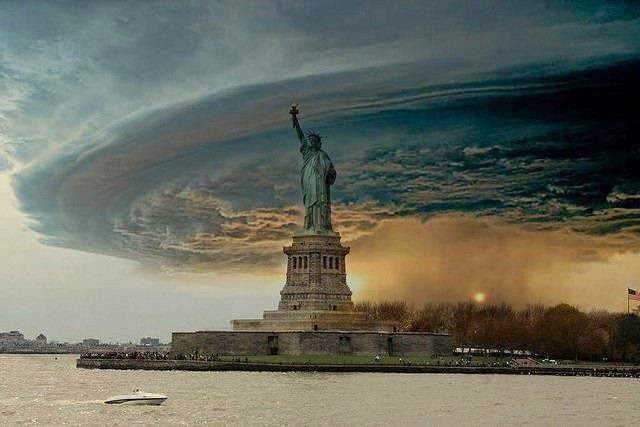
Hurricane Sandy about to get unruly

  • Although I had floated around it many times, I had never been to Statue of Liberty Island. We took our granddaughter and her friend. We discovered Disney World lines managed with government efficiency. Next time, if there is one, I’ll pick inclement weather. At least, that’s what I thought until I found this picture of the island with Hurricane Sandy looming on the horizon. Still lots of people. Maybe next time I’ll just float around it again. 
  • I was walking the dog with my son when he pointed out a townhouse with narrow, one-car garage. He thought it would be wonderful to have a private garage in the city. I told him I owned three of them in Omaha. He asked if they were in front or behind the chicken coop. 
  • All bookstore have small Western sections, but NYC stores have relegated Westerns to a single shelf in the most obscure corner of the stacks. Since New York is my third largest sales region, I think they are missing a bet.

Wednesday, April 23, 2014

Timothy O’Sullivan’s Photographs of the Real Wild West

Timothy O’Sullivan, who had been an apprentice to Mathew Brady, headed west after the Civil War to photograph the American frontier. O’Sullivan made three expeditions to the West. In 1867 he was appointed photographer for the Geological Exploration of the Fortieth Parallel, the first governmental survey of the American West. In 1871, O'Sullivan joined the geological survey under the command of Lieutenant George M. Wheeler of the U.S. Corps of Engineers. His third expedition in 1873, also with Wheeler, included the Zuni and Magia pueblos and Canyon de Chelly.

#photography, #art, wild west
Colorado

native Americans, Indians, Wild West
Utah

desert, teamsters, wild west, frontier
Nevada
Toby Jurovics, exhibition curator for a 2010 (Smithsonian and Library of Congress) O’Sullivan’s exhibit  said, “The important thing about O'Sullivan is that this is a person who spent three years during the Civil War and seven years in the West with his head under a dark cloth making pictures. There’s an intimacy in the creation of his photographs that goes beyond being an agent for a scientific purpose or government agenda, or making photographs as a hired documentarian. At the end of the day, it comes down to a single person with a camera making decisions, and the ones O'Sullivan made were pretty interesting. What you can tell about O’Sullivan is that he had very different ideas about how to structure his photographs. If you put one hundred nineteenth-century photographs in a box, you can pull out the O'Sullivans pretty easily.”