Showing posts with label #Colorado. Show all posts

Tuesday, July 24, 2018

Cowboys are cool. Cows, not so much


“A mine is a hole in the ground, owned by a liar.” Mark Twain

I recently saw a college friend for the first time in decades. He seemed surprised to learn I wrote novels. I guess I need to work on that world famous part. 

“What do you write?” he asked.

“Westerns.”

He immediately made a disparaging crack about cowboys and Indians.

I explained there were no cowboys in my novels.

He was incredulous. “Then what do you write about?”

“I write about people … people who happened to live on the American frontier. My characters live in cities, towns and camps, not on the range. They’re miners, businessmen, politicians, schoolmarms, shopkeepers, lumbermen, lawyers, doctors, newspapermen, and they come in all ages and in both sexes.”

“Bad guys?”

“Oh yeah, outlaws aplenty. Otherwise you don’t have a story.”

“And gunfights?”

“Of course. They’re part of the genre. But in six books, I’ve only had one duel where two men stood off against each other. My gunfights are more realistic to the history of the West.”

“But no cowboys?”

“Nary a one. Cows didn’t draw people west. Money laying in the dirt got people to get up and leave home. Mining drew far more people than ranching. The romantic cowboy has been written about since Owen Wister and The Virginian, and cowboys have become the stable of Western literature. When I started writing Westerns I wanted to do something different, so I wrote about mining, instead of ranching.”

mark twain
Virginia City
I continued, “Cowboys have become such a cliché that most people don’t know that Tombstone was a mining town, not a cow town. Denver started as a mining camp. Mark Twain’s encounters with the Wild West occurred in Virginia City, where $305 million was mined from the Comstock Lode.  (Still, the fictional Cartwright’s Ponderosa gets all the attention.) 240 million troy ounces of silver were extracted from Leadville. Almost all of our ghost towns were once thriving mining camps. Mining was an exciting industry that drew every kind of character to the West.  Wyatt Earp made a career of following the action, and he abandoned cows to chase after silver and gold.”

“So you don’t like cowboys?” He said this with an undue sense of satisfaction.

“I do. Cowboys are self-reliant, live by a code, and are skillful with horses, ropes, guns, and nature. I believe their individualism is a metaphor for an important American value. But others have already written about cowboys, cow towns, and the open range. I wanted to explode another facet of the Wild West, so I write about mining, which allows me to get into bustling cities and the technology revolution of railroads, telegraphs, and electricity. Instead of lamenting the demise of the Wild West, I examine the influences that eventually tamed the frontier.

 “Is there drama in mining?” he asked.

“Are you kidding? Money is power … and the power-crazed chase after wealth with a passion. Mining drew fortune seekers, politicians, shysters, engineers, shopkeepers, and people with every kind of scheme under the sun to separate miners from their money. Most rail lines after the transcontinental contest connected mines to markets. Everybody chased after the money: good men, bad men, and hard cases that enforced the will of the greedy.”

“Okay, okay, you convinced me,” he said. “I’ll try one of your books.”

As Hollywood says, this story has been inspired by true events. That means a conversation did occur somewhat along these lines, but I was much less articulate in real life.

Honest westerns filled with dishonest characters.

Thursday, September 28, 2017

Can Tasteful Nudes Save an American Icon?


I write westerns partly because I want to preserve our frontier heritage. (I also write them for fun and profit.) Recently, I encountered someone who is preserving the Old West in a much more concrete way. Laurel McHargue and her cohorts are raising money to preserve the Tabor Opera House in Leadville, Colorado.

Listed on the National Trust for Historical Preservation, the Tabor Opera House is a unique artefact of our frontier culture.
Known as “the most perfect place for amusement between Chicago and San Francisco,” this unique and historic opera house is poised to once again become a vibrant community asset in a transitioning mining town nestled amongst Colorado’s highest peaks.
Built in 1879 in a mere 100 days by mining tycoon Horace Tabor, the opera house stage has been graced by entertainers such as Oscar Wilde, Harry Houdini, and Judy Collins.
The opera house has been minimally and seasonally operated for decades and suffers from deferred maintenance due to lack of resources. A full rehabilitation is estimated to cost up to $10 million, a hefty lift in a small mountain town of 2,600 people. The future of the building is uncertain as the National Trust and partners work to transition its ownership structure.


I have a kinship with this project because Horace Tabor has a walk-on in my book, Leadville. Further, the proof-of-life note for Captain Joseph McAllen's daughter was written on the back of a Tabor Opera House broadside.

Laurel McHargue organized the Leadville Literary League. These brainy women noodled how to raise money to preserve the most important historic building in this once-prospering mining town. In the end, they took their inspiration from the 2003 film Calendar Girls.

You can get sneak peek under the covers in this Calendar Girls Video Trailer


You can help save the Tabor Opera House by pre-ordering your 2018 historic calendar at http://leadvillelaurel.com/ or by contacting Laurel McHargue (laurel.mchargue@gmail.com) for an order form!
  They’ll be the most unique gifts you can buy for all your 2018 gift-giving needs!
All net proceeds from sales of this calendar will be donated to the Tabor OperaHouse Preservation Foundation to save and restore this beautiful 1800s Opera House

Here's an even better idea. The calendar cost is $19.95, but if you can pledge $25 to the project on Kickstarter, you'll receive a calendar as part of your pledge. For only five dollars more, you become a patron of the arts.

Honest westerns filled with dishonest characters.

Excerpt from Leadville:


“Jeff, he ripped a Tabor Opera House flyer off the wall.”
“So?”
“It went up yesterday and advertises Anna Held. If she writes her note on the backside, it’ll prove she’s alive as much as her pen hand.”
“She’s alive. Otherwise they wouldn’t agree to get a note from her.”
“But once they’ve given us the letter, do they have any reason to keep her alive?”

Wednesday, April 19, 2017

Crossing the Animas


The trade paperback edition of Crossing the Animas is now available. You can buy it at Amazon here.

You might be surprised by the plot. Steve gets into trouble once again. McAllen builds a horse ranch, Sharp finds a long-lost love, and Steve and Virginia plan a wedding. Bad guys aplenty want to disrupt all of their plans. Wonder how it will work out.

Thursday, April 7, 2016

Trains are Trendy


I read that railroad construction is all the rage in Western novels. I suppose Hell on Wheels spiked the popularity of trains, but I find the trend troubling. I'm currently writing Crossing the Animas, my latest Steve Dancy Tale. As the title suggests, it takes place in the San Juan Mountains between Durango and Silverton. In 1882, the Denver & Rio Grande built a narrow gage line between the towns to get ore to market. Needless to say, the construction of the line is an element of my story.

My first impulse was to edit out the railroad construction. I didn't want to appear to be jumping on a fad. It went against my nature, I guess. (At the end of The Shopkeeper, I Wrote, "We rode out of Mason Valley with the sun at our backs." A Western chestnut has the hero rides off into the sunset, so I used the opposite direction tongue-in-cheek.) I decided against “pulling the pin” because the rail line construction wasn’t a huge element in the story and I liked the characters that came with the trains. I hate killing off characters to no purpose. I’ve heard of off-page violence and off-page sex, but off-page character assassination serves no purpose. Besides, trains and rail expansion have been an element of the Steve Dancy Tales from the beginning.

By the way, Hell on Wheels is a hell of a good show. Now if we could just get Justified back.

Hell on Wheels


Sunday, October 18, 2015

How to make a cowboy hat

Hollywood western movies
Looking the Part

I'm not a hat person. Although I own dozens of hats, I seldom wear one. I don't even like helmets. I grew up in a generation where you just wheeled your bike out of the garage and went riding without a helmet or spandex regalia. When we pulled our long boards to the beach behind our bikes, we wore flip flops, board shorts, and little else. I ski with soft head gear and when I surf, so far I can still rely on my hair to keep the sun from burning the top of my head.

That said, I like cowboy hats. I own one but seldom wear it because after all these years, it still looks new. I bought it at Wall Drug, and it immediately blew off my head and rolled down the center of the street for a quarter mile and still looked brand spankin' new*. I envy tattered, sweat-stained cowboy hats that scream authenticity. Mine says tenderfoot in neon. I know, I know, if I wore it more, it would eventually look like the genuine article. I'm just not a hat person.

For western head gear, I prefer Resistol, but here's a video from Stetson about making cowboy hats. Betcha thought it was a lot simpler.


* I'm a bit obsessed with phrases. This is an interesting article about the origins of brand spanking new.

Wednesday, April 29, 2015

Review of Jenny's Revenge

Jenny's Revenge, A Steve Dancy Tale by James D. Best

What Would the Founders Think? has reviewed Jenny's Revenge. In the  past, I have been a contributor to this site. Despite our chummy relationship, I'm sure this review is, if you'll excuse the expression, nonpartisan. Actually, Martin is a great book reviewer and is sent advance copies from many major publishers.

He says, "The story races along at break-neck speed and concludes with some surprising alliances and betrayals. Along the way, there are slimy politicians, crooked lawyers and lethal gunfighters."


Jenny's Revenge, A Steve Dancy Tale


Tuesday, April 14, 2015

Jenny's Revenge, A Steve Dancy Tale

western historical fiction
Honest Westerns ... filled with dishonest characters.

At long last, Jenny's Revenge is available ... at least in e-book formats. The fifth in the Steve Dancy series is available on Kindle and Nook and soon in the iBook store for Apple. Unfortunately, the print version is still about six weeks away. This is my first publication where the e-book and print version weren't published simultaneous, but in case you haven't heard, computers move faster than printing presses.

Here's a synopsis:
Jenny Bolton has plans, and they don’t bode well for Steve Dancy. 
Married at fifteen to a Nevada politician, Jenny suffered repeated assaults, witnessed her husband's ghastly murder, buried her vile mother-in-law, and killed a man. Dancy, who had once served as her paladin, rejected her without as much as a goodbye. Abandoned on a raw frontier, she's single-handedly building an empire that spans the state. Despite her triumphs, she feels she never should have been left alone. 
Soon to marry, Steve is eager to begin a new life unaware that Jenny is mad for revenge.
I hope you enjoy the book, and thank you for reading the Steve Dancy Tales.


Tuesday, November 4, 2014

Jenny's Revenge at The Fictional Cafe

Western fiction

The Fictional Café has previewed the first chapter of Jenny’s Revenge, the fifth novel in the Steve Dancy series

If you enjoy fiction, bounce around the Fictional café. You’ll find author interviews, sample writings, book reviews, and pod casts. Membership is free.


Western action adventure fiction
Honest Westerns ... filled with dishonest characters


Tuesday, July 15, 2014

A Train to Nowhere

This past weekend we spent a mini-vacation in Breckinridge with our daughter’s family. The Breckinridge Summer Fun Park thrilled the grandkids, but made my back sore. After a half dozen runs on the Gold Runner Coaster and a few races down the Alpine SuperSlide, this ol’ gent was ready for something more sedate.


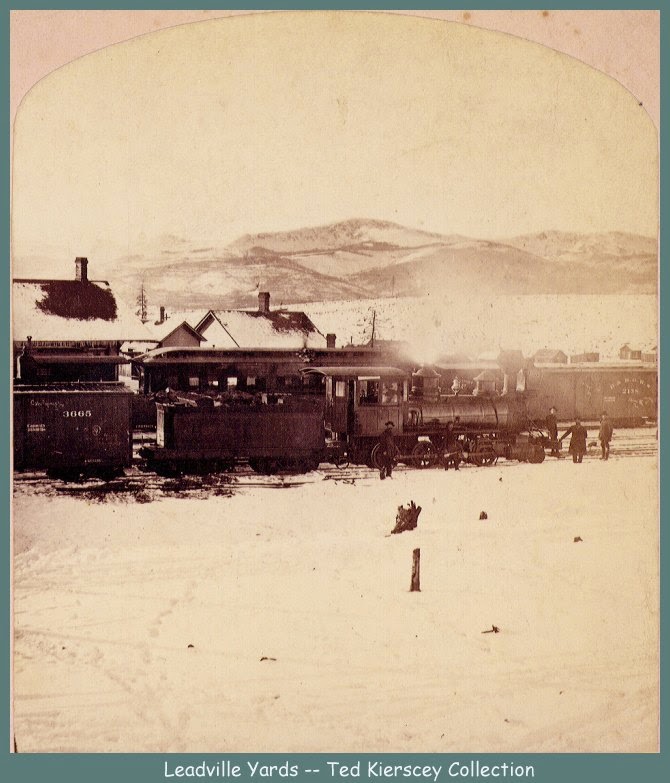
I had never taken the two and a half hour ride on the Leadville Colorado & Southern Railroad because the train came along after my Steve Dancy Tales. In Leadville, the second in the Steve Dancy series, trains had not yet arrived in the ore rich town. A sub-plot in the book involved the Santa Fe and Denver & Rio Grande competition to lay the first narrow gauge track into Leadville. This feud between the two railroad companies had started years earlier in New Mexico. In The Return, Steve and his friends comfortably ride to Leadville on the winning Denver & Rio Grande line.

The Return, A Steve Dancy Tale by James D. Best
Leadville Colorado & Southern Railroad

Leadville by James D. Best
Denver & Rio Grande


The predecessor to the standard gauge Leadville Colorado & Southern train came along about a decade later. The tourist attraction travels for about seventy-five minutes, stops at an authentic water tower, and then reverses direction. I knew the train didn't use restored period cars, so I wasn't expecting an authentic frontier experience. Beyond resting my back from being jerked hinter and yon, I enjoyed the ride and appreciated seats which had been configured for comfortable sightseeing. 

The kids enjoyed the train ride as well, but were happy to get back to the Coaster and SuperSlide. It made me wonder what a frontiersman would think of our modern playthings … or the cost. The mines may have played out, but there is still gold in them thar hills. 

Honest westerns ... filled with dishonest characters.


Thursday, June 12, 2014

Searching for Denver’s Past

I prefer to write my stories before doing significant research. (Except for Tempest at Dawn, which required advanced study and planning.) When I do the research first, I feel compelled to wedge into the story all of the fascinating facts I discovered, so the research ends up driving the storyline. One of the axioms of writing is to not let your research show. I find it easy to attain this goal by getting the story right first … then adding tidbits of historical information to set the time and place.

Historic Hotels
Oxford Hotel, 1891
I also need to walk the ground of my novels. For me, description is difficult, so it helps to visit the locations used in my novels. I don’t want description to downshift pacing, so I prefer to sprinkle around terse descriptions to give a sense of place similar to how the characters might perceive their surroundings as they went about their business. I also take lots of photographs, so when I write about a place, I can simultaneously view digital photographs of the area.


Jenny’s Revenge, A Steve Dancy Tale starts in Denver, Colorado and moves on to Carson City, Nevada. My wife and I decided to spend a long weekend in Denver to add some location color. We had a great time and I got some good details to incorporate into my story.

In 1881, Denver was so fresh and striving that the official name was Denver City. The second half of the name was for those who might have doubted the status of the buildings clustered along the edge of the Great Plains. Nowadays, Denver is a thriving cosmopolitan area and they have removed City from their name. 

Historic hotels
Inter-Ocean Hotel, 1873
We stayed at the historic Oxford Hotel, which opened in 1891. Although this is a decade after my story takes place, the hotel helped me travel back in time. In Jenny’s Revenge, Steve and Virginia stay at the Inter-Ocean Hotel, which used to be located a block away from the Oxford. The Inter-Ocean was owned by Barney L. Ford, an escaped slave who taught himself to read and write. Unfortunately, the Inter-Ocean eventually became a flop-house and was torn down in 1973.


historic hotels
Windsor Hotel, 1880

Another prominent hotel in the story is the Windsor, but it no longer exists either. Well, that’s not exactly right. We were standing on the correct intersection, but I couldn't figure out the proper corner when my wife pointed up. Sure enough, we were standing in the shadow of the Windsor condominium building. Just like Steve and Virginia, my wife and I then walked the three blocks between the long ago demolished hotels.


Thankfully, the Oxford never saw the wrecking ball. The Oxford staff is excellent and they take their historic heritage seriously. It’s a fun stay and the incongruous Cruise Bar is an exceptional experience. The Art Deco bar feels out of place beside the Western motif and Victorian architecture, but it was the first bar in Denver after prohibition, so it has a birthright of its own.

Mizpah Arch from Union Station
Mizpah Arch Leaving Town


I wish I could use the Mizpah Arch in my story, but it wasn’t erected until 1906. This arch stood five stories high and was lit with 2,194 light bulbs. As a passenger exited Denver Union Station, the sign read Welcome. On the reverse side it read Mizpah, which is a Hebrew word expressing an emotional bond between people who are separated. It was a landmark that became obsolete when cars became wider and upkeep expensive. In 1931, the Mizpah Arch became history.

Denver is a fun city with great food. It past is not hard to find. It sits right there in LoDo, lower downtown. This area used to encompass all of metropolitan Denver, but in the hundred and thirty years since my story took place, people and commerce have bulged out to occupy the empty plain that sat to every side of this mile-high city.

Wednesday, April 23, 2014

Timothy O’Sullivan’s Photographs of the Real Wild West

Timothy O’Sullivan, who had been an apprentice to Mathew Brady, headed west after the Civil War to photograph the American frontier. O’Sullivan made three expeditions to the West. In 1867 he was appointed photographer for the Geological Exploration of the Fortieth Parallel, the first governmental survey of the American West. In 1871, O'Sullivan joined the geological survey under the command of Lieutenant George M. Wheeler of the U.S. Corps of Engineers. His third expedition in 1873, also with Wheeler, included the Zuni and Magia pueblos and Canyon de Chelly.

#photography, #art, wild west
Colorado

native Americans, Indians, Wild West
Utah

desert, teamsters, wild west, frontier
Nevada
Toby Jurovics, exhibition curator for a 2010 (Smithsonian and Library of Congress) O’Sullivan’s exhibit  said, “The important thing about O'Sullivan is that this is a person who spent three years during the Civil War and seven years in the West with his head under a dark cloth making pictures. There’s an intimacy in the creation of his photographs that goes beyond being an agent for a scientific purpose or government agenda, or making photographs as a hired documentarian. At the end of the day, it comes down to a single person with a camera making decisions, and the ones O'Sullivan made were pretty interesting. What you can tell about O’Sullivan is that he had very different ideas about how to structure his photographs. If you put one hundred nineteenth-century photographs in a box, you can pull out the O'Sullivans pretty easily.”