Showing posts with label writing. Show all posts

Wednesday, August 16, 2023

Literary License or Error?


If readers are the judge, Old Haunts is a good read. After three months, Old Haunts has garnered a 4.5 Amazon score with 88 ratings and a 4.7 Goodreads score with 44 ratings.

That doesn’t mean the novel has received exclusively high ratings. No book does. A couple of the poorer reviews mention two issues. One of the issues is embarrassing and the other intentional.

Guns and horses are sacrosanct to western enthusiasts. Since he was a rich man, Steve Dancy always carries the latest in firearms. In Old Haunts, he uses a Winchester Model 1895, the first Winchester to use a box magazine to accommodate pointed bullets. To my embarrassment, I mentioned that he uses .30-06 ammunition. The story takes place at the end of the nineteenth century and the .30-06 was developed in 1906 (thus the 06). I have revised later editions to call out .30 Army ammunition.

The story also has the bad guys driving an 1896 Armstrong Phaeton. I knew only one Armstrong Phaeton was built, but it was a unique vehicle. A hybrid, with both a gasoline engine and an electric drive. Unfortunately, the manufacturer went bankrupt before this horseless carriage went into production. I thought the car was fascinating, and I needed a vehicle that could carry four. No worries. Novelists have magical powers and, in the world I created, the Armstrong Phaeton was available to cart around four bad guys in style.


Tuesday, February 8, 2022

The Steve Dancy Tales has exceeded 100,000 Kindle Sales


Honest westerns. Filled with dishonest characters.

This feels like a major milestone, so I guess it must be. In January, The Steve Dancy Tales (7 books) exceeded 100,000 Kindle sales. Sales are over 120,000 when print, library large print, and audio are considered. (That’s really fun to type.)

More important, the Tales have over 2,000 Amazon ratings for 4.5 stars and over 4,000 Goodreads ratings for 4.4 stars.

Thank you to all my readers. I appreciate you.

Now, if only I could get my thriller series to catch up.


Saturday, January 29, 2022

A Tale of Two Antagonists


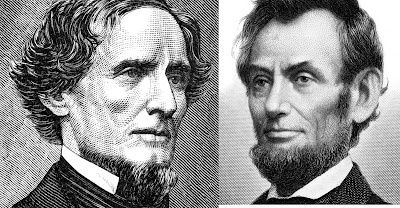
Abraham Lincoln and Jefferson Davis were interesting characters. Exactly the type of characters a novelist needs to carry a story.

In writing Maelstrom, I had a scene where Lincoln addresses Congress after a recess. (As customary at the time, his address was read by a clerk.) Not much has happened during the recess. Eleven states had seceded from the Union, Fort Sumter had been bombarded and surrendered, a piece of Virginia had been occupied, and Lincoln had exceeded his executive powers to spend unauthorized money, build an army, and suspend habeas corpus among other things.

He desperately needed Congress to backfill behind him.

This was a crucial address. Important for Lincoln and the country. The address was not one of his well-known speeches, but I was struck by the clarity and simplicity of the explanation of why he took these actions.

Lincoln said it was a struggle for maintaining a form of government “whose leading object is to elevate the condition of men—to lift artificial weights from all shoulders—to clear the paths of laudable pursuit for all—to afford all an unfettered start, and a fair chance in the race of life.”

I cannot think of a loftier goal for government.


Thursday, January 13, 2022

War on the Waters, James M. McPherson


With the exception of the Monitor vs. Merrimack (CSS Virginia), naval battles get short shrift in Civil War books. McPherson certainly fills that gap with War on the Waters, The Union and ConfederateNavies, 1861-1865. Land battles were certainly decisive, but the Union may have lost the war without Gideon Welles and the Navy Department. McPherson even makes a strong argument that Rear Admiral David Glasgow Farragut deserves to be ranked with generals Grant and Sherman when giving credit for the Union victory.


Inventions and innovations by both the Confederate States and the United States revolutionized naval warfare. Steam-powered ships, screw propeller driven ships, ironclads, submarines, weaponry, and naval tactics all made major advancement during those four years. By Appomattox, the United States owned the largest navy in the world, and arguably the most technologically advanced.

War on the Waters does an admirable job of describing blue water and brown water (river) battles and in explaining the significance of each clash. I found the battles that required cooperation between the Army and Navy of particular interest. As an added bonus, International law on blockades is more fully described than in other history books.

McPherson’s no nonsense writing style can sometimes verge on dull, but he always pulls the reader back to the narrative in the nick of time.

I recommend this book to all those who have an interest in the Civil War, naval battles, technology advancement, or military politics. War on the Waters is informational and a good read.

(This is a research book for Maelstrom, a sequel to Tempest at Dawn.)

Friday, December 10, 2021

Merry Christmas and Happy Hanukkah


Books make a thoughtful present and are a great entertainment value. They provide hour upon hour of personal pleasure, and then they can be passed on to another person. What could be better?


"The Shut Mouth Society is a fast-moving, well-written novel." David M. Kinchen, Huntington News

"Best makes this a compelling—indeed frightening—story. Deluge is a highly recommended natural disaster thriller, written with acute attention to reality and little, if any, needless melodramatics." Jack B. Rochester, Fictional CafĂ©


The Steve Dancy Tales

Goodreads: Nearly four thousand series ratings for 4.4 stars


The real story of our nation's founding.

"This is by far the BEST book on the origins of the U.S. Constitution . . . and it's a novel. But Best gets all the motivations and details right as any "history" book. Get this!"

Larry Schweikart, author A Patriot's History of the United States and over a dozen other history books


Tips from the best writers in history.

A great stocking stuffer for the writer in the family.


Order Today

Wednesday, July 29, 2020

Thomas Edison Created the Movie Industry and Produced the First Western


When people talk about the film industry, they seldom mention Thomas Edison, yet he filmed the first western at his studio in New York City. In 1903, the Edison Manufacturing Company distributed The Great Train Robbery. The nine minute film set many of the constructs for the genre. Stay till the end to see one of the motion picture industry's most iconic visuals.

I believe this makes Mr. Edison a cowboy at heart, which gives him the right to cavort in a Steve Dancy Tale. In The Return, Steve travels to New York to acquire rights to sell Edison's inventions in the Western states. Needless to say, he runs into trouble. I suppose The Return could be called a mash-up. The Old West conquers another world, one where a cosmopolitan refinement barely disguises a violent underworld run by gangs and overlords.

The Edison and gangland history is accurate. Steve Dancy's participation, not so much.


Honest Westerns filled with dishonest characters
The Return, A Steve Dancy Tale
143 Amazon Ratings for 4.6 stars
James D. Best is arguably one of the best writers of westerns, but his newest novel, The Return, is set in the East. --Alan Caruba, Bookviews
It's the summer of 1880, and Thomas Edison's incandescent bulb is poised to put the gaslight industry out of business. Knowing a good business opportunity, former New York shopkeeper Steve Dancy sets out to obtain a license for Edison's electric lamp. Edison agrees, under one condition: Dancy and his friends must stop the saboteurs who are disrupting his electrification of Wall Street. More worrisome, he has also unknowingly dragged along a feud that began out West. The feud could cost him Edison's backing ... and possibly his life.

Wednesday, April 15, 2020

Westerns in Literature


Western fiction has been hugely popular for almost two hundred years. Not only were Westerns popular in the United States, but the whole world devoured them. For decades, the Western was a staple of fiction, Hollywood, television, and daydreams. Today, many think Western fiction is moribund. They’re wrong. Authors like Johnny Boggs continue to carry on the tradition, and my own novels sell well. The popularity of Westerns is often measured against the impossible yardstick of the 1950s.

Some say we’ve become too sophisticated to swallow the traditional Western mythology. Those are people who have not taken a thoughtful look at Harry Potter, The Hunger Games, or even the glut of superheroes that plague theaters, bookshelves, and toy boxes. The stories are the same, only the venue has changed. The Western in its traditional garb will come roaring back when audiences tire of yet another iteration of CSI or men in tights.

Western fiction is frequently dismissed as not being serious literature. This misconception is perpetuated by classifying literary stories that occur in the Old West as something other than a Western. Many of the smart set believe Westerns can only be dime novels, pulp fiction, or straight-to-paperback formula bunkum. But the Western has a long and valid history in literature.

James Fenimore Cooper may have been the first Western author of note. The Last of the Mohicans and the rest of the Leatherstocking Tales were told in the Western tradition. Written in 1826 about events that supposedly occurred nearly seventy-five years prior, The Last of the Mohicans incorporates all the characteristics of a modern Western.

Mark Twain is universally acknowledged as one of the great American literary figures, but is seldom referred to as a Western writer. Yet, Roughing It is a first-hand description of the Wild West of Virginia City during the heyday of the Comstock Lode. Granted, Roughing It is Twain-enriched non-fiction, but The Adventures of Tom Sawyer and The Adventures of Huckleberry Finn are coming-of-age novels set in the American frontier. (By the way, Mark Twain hated James Fenimore Cooper's writing. You can read all about it here. Pretty funny.)

When Owen Wister published The Virginian in 1902, the novel received critical acclaim and was a huge bestseller, eventually spawning five films, a successful play, and a television series. An instant success, it sold over 20 thousand copies in the first month, an astonishing number for the time. It went on to sell over 200,000 thousand copies in the first year, and over a million and a half copies prior to Wister's death. This classic has never been out of print.

Max Brand, Zane Grey, Louis L’Amour, Jack Schaefer, Elmer Kelton, Larry McMurtry, and Cormac McCarthy continued the Western tradition and all of them have been highly successful. Recently Nancy E. Turner (These is my Words) and Patrick deWitt (The Sisters Brothers) have penned praiseworthy Westerns that are popular with readers.

Western literature has a grand heritage and will continue to appeal to readers all over the world.   Good writing, plots that move with assurance, and great characterization will elevate the genre back the top of the bestseller charts.

Honest westerns filled with dishonest characters.


Thursday, April 2, 2020

Musings on the CoronaVirus

My stomping ground, sans people.


We winter in San Diego. Nothing against the grandkids, but everything against snow, cloud cover, and biting cold. This year we got chased home before Easter by something we couldn't even see. A little bugger. For a couple days, I wondered if we did the right thing. Our San Diego condo is walking distance to everything. If fuel became a problem, we could still live there forever.

Now, I'm glad we're ensconced in Omaha, Nebraska. During the Cold War, the Air Force put the Strategic Air Command in Omaha because it was smack-dab in the middle of the country, which made it harder to hit with a big ol' honkin' ICBM. Evidently, that pesky little virus has trouble hitting it as well. At any rate, we have the bug, but not nearly as severely as the rest of the country.

In the meantime, California has gone coconuts. The whole state is in lock down. You can't walk with anyone who doesn't reside in the same house. You can't walk on the beach. You can't walk on the strand. You can't go in the ocean. You can't surf. (By the way, the best surfing is getting a wave to yourself. So, social distancing helps make a great day in the water.) The police can even ask you why you're walking on the sidewalk.  I wish people well and hope this isolation protects the health of Californians.

As for Nebraska, we're under similar guidelines but, for the most part, enforcement is on the honor system and disciplined by peer group pressure. I'm not sure it's any different, but it feels less onerous. I hope it continues along this line, but that will depend on the behavior of people. So far, so good.

As for myself, I haven't left the house and yard for a few weeks. Okay, a few walks around the neighborhood. But that's it. Honest. My daughter keeps calling to see if I'm bored yet. I keep reminding her that I'm a writer. I just sit down at a keyboard and transport myself to another place and time. Without friends, relatives, or the ocean interfering, I'm getting more done than usual.

I am getting nostalgic, however. I pine for the days when I could run out of the house on a whim, hug my grandkids, and have dirty hands.

Ah, for the good ol' days.

By the way, if you're bored, try one of these. They'll take you to another place and time. Unfortunately, when you set them aside, they'll drop you right back in the same world.

Honest stories filled with dishonest characters.


Thursday, January 30, 2020

Books, editors, and publishing in a man's world

Update: In the Land of Men is now available.

In previous posts, I mentioned that several times a year I read books about writing, the publishing industry, or literary criticism. My next will be In the Land of Men by Adrienne Miller. (Publication February 11, available for pre-order) Adrienne Miller was the literary and fiction editor of Esquire from 1997-2006. This "fiercely personal" memoir tells us about her experiences as the often lone female editor in a male dominated industry.

A rich, dazzling story of power, ambition, and identity

The New York Times named In The Land of Men as one of 14 New Books to Watch For in February, The Washington Post includes it in their Top Ten Books to Read in February, and it’s Parade’s February Must-Read. The book is also on major “Most Anticipated Books of 2020” lists, including Vogue, Esquire, Parade, Maclean’s, Bitch, and has received amazing early endorsements from authors Jonathan Lethem, John Hodgman, Meghan Daum, Gary Shteyngart, Eleanor Henderson, among others. Early reviews appear in the latest print issues of Vogue and InStyle.

Wednesday, November 20, 2019

Book Review -- How Literature Works by John Sutherland


50 key concepts for writing fiction

John Sutherland is a literary critic and columnist for the Guardian. The sub-title of his book is "50 Key Concepts" and it's organized into 50 4-page chapters. Fancy that. I read a couple books a year on writing and occasionally read books on literary criticism. Literary criticism tomes tend to be esoteric and assume the reader already has broad knowledge about the subject. Sutherland's book is concise and written in clear English any layman can understand. I read these books to improve my writing and most of the time I need to wade through lengthy jargon-laced verbiage to find nuggets that are helpful. Sutherland's clarity, short chapters, and headings make this task relatively easy. I find what I'm looking for or move on to the next chapter.

If you're a writer, reader, or like to study literary criticism, How Literature Works is a fun find. Besides, most academic books on the subject require a new mortgage while Sutherland's perfect-bound paperback is only $11 on Amazon. The Kindle version is $9.50.

If you're interested in writing, be sure to check out my Writers and Writing pages on this blog.

Friday, October 18, 2019

Why things have been quiet here


I just returned from a great vacation that explored the northeast of North America. My wife and I flew to Montreal to meet my sister and sister-in-law for a three-week trip. We spent three days sightseeing in Montreal and then boarded a sanely-sized ship to cruise the Saint Lawrence River around Nova Scotia and on to Boston. We stopped daily at Canadian and then American towns, with plenty of time to go ashore to explore and spend money. I used to live in Boston, so our four days there were nostalgic. We even took a day trip to Concord, my favorite New England town. Next, on to New York City for more sightseeing and a week with the grandkids. Just arrived home and tuckered out.

Did I get some writing done? I did. But not nearly as much as I thought I would. The ship moved at night from one interesting location to another, so down time on the cruse was limited. On occasion, I returned to the ship and let the women shop. When alone, I wrote while sipping whiskey in the Crow's Nest bar. Pretty cool environs.

Now I’m home and eager to write on a daily basis. That is, after I unpack, get the house winterized, go to a couple of my grandson’s soccer games, and pay a few bills. How in the world did I find time when I worked steady?


Don't forget to buy the latest Steve Dancy Tale

Thursday, August 29, 2019

Author Interview at NFReads.com

Today, NFReads published my author interview. They ask good questions, so if you want to know my dark secrets, take a gander. Just kidding. I kept my darkest secrets in a closet under two tons of rubbish.


P.S. Don't forget to pre-order No Peace, A Steve Dancy Tale

Thursday, July 18, 2019

Deadwood: The Movie

Even the film poster celebrates the F-word

(Spoiler alert: if you're a Deadwood fan, you won’t like what follows.)

I watched Deadwood: The Movie last evening. A little late to the game, but it's difficult to watch this western with teenage girls in the house. Actually, the three thirteen-year-olds have only lived with us a week and the HBO Film has been available for over six weeks. In truth, I wasn’t keen to see it. After three separate attempts, I never finished the series … and I write Westerns for a living. What’s wrong with me?

I loved the television show until Wild Bill Hickok died, then I no longer cared about any of the characters. Deadwood didn’t draw me back because the story wasn’t compelling. Same for the HBO Film. The movie tied up every loose end, and every actor got to invoke their character’s iconic pose, but the main storyline could easily have been captured within a single episode. The rest felt like fill and forced nostalgia.

The problem with Deadwood is the overuse of visual and dialogue gimmicks to project an artful image. The ploys get old after a few episodes. The harsh profanity mixed with stylized formal speech reminded me of Betty White using the F-word; funny at first, tiresome with repetition. The cardinal rule of storytelling is to never take the reader/viewer out of the story, and the odd dialogue did just that.

Many believe the stilted speech—punctuated with swearwords—made the show unique and artsy. Executive Producer David Milch insists that the vulgar, Elizabethan-like dialogue is based on historical research. To steal a word from the era: poppycock. No characters talked this way in any of the stories by Mark Twain, Louisa May Alcott, or Owen Wister, who were all there. In that age of propriety, they would have omitted profanity, but I doubt Wild West speech would make rap singers sound virginal. In case you think I'm a prude, I occasionally use harsh profanity in my novels, but sparingly, so the impact is not diluted by repetition.

The Deadwood dialogue reminds me of James Fenimore Cooper’s attempt to invoke an earlier age with excessively formal language. Cooper wrote historical novels that occurred about a hundred years in the past. Mark Twain, my favorite Western author, didn’t like Cooper’s writing. Wait, that was far too mild of a sentence. In his article “Fenimore Cooper's Literary Offenses,” Twain ridicules, lacerates, and skewers Cooper.

I may be mistaken, but it does seem to me that "Deerslayer" is not a work of art in any sense; it does seem to me that it is destitute of every detail that goes to the making of a work of art; in truth, it seems to me that "Deerslayer" is just simply a literary delirium tremens. A work of art? It has no invention; it has no order, system, sequence, or result; it has no lifelikeness, no thrill, no stir, no seeming of reality; its characters are confusedly drawn, and by their acts and words they prove that they are not the sort of people the author claims that they are; its humor is pathetic; its pathos is funny; its conversations are -- oh! Indescribable;  its love-scenes odious; its English a crime against the language.
Counting these out, what is left is Art. I think we must all admit that.

Twain wrote about dialogue in another section:

When the personages of a tale deal in conversation, the talk shall sound like human talk, and be talk such as human beings would be likely to talk in the given circumstances, and have a discoverable meaning, also a discoverable purpose, and a show of relevancy, and remain in the neighborhood of the subject at hand, and be interesting to the reader, and help out the tale, and stop when the people cannot think of anything more to say. But this requirement has been ignored from the beginning of the "Deerslayer" tale to the end of it.

Even the style of this article is meant to mock formalistic writing.

In summary, the starchy speech demanded attention but didn’t enhance the storytelling. I found the volume and volume of profanity off-putting and wearisome. The nostalgic scenes didn’t work for me because I hadn’t missed the characters. Excluding that, what is left is pretty good. I think we all must admit that.

You might also like: Mark Twain Tells Us How to Write

Monday, July 15, 2019


No Peace is one step closer to publication.

I have used the same editor for eleven books, and once again, I'm beholden to her for saving me embarrassment. I always think I've submitted a perfect manuscript, only to discover a prodigious amount of red ink on every page. Contrary to popular belief, novels are not entirely a solitary task. Beta readers, editors, book designers, and cover graphic designers all play a major part in bringing piece of fiction to market. I am grateful for them all.


Tuesday, February 19, 2019

Famous Last Words


The Washington Post has an article on “The 23 most unforgettable last sentences in fiction.” Many critics and readers focus on the first sentence, but the last sentence is the one that leaves the final impression. Here are a few of my favorites.


“I got to light out for the territory ahead of the rest, because Aunt Sally she’s going to adopt me and sivilize me, and I can’t stand it. I been there before.”
Adventures of Huckleberry Finn by Mark Twain
“It’s funny. Don’t ever tell anybody anything. If you do, you start missing everybody.”
The Catcher in the Rye by J.D. Salinger
“He was soon borne away by the waves, and lost in darkness and distance.”
Frankenstein by Mary Shelley
“After all, tomorrow is another day.”
Gone With the Wind by Margaret Mitchell
“He loved Big Brother.”
Nineteen Eighty-Four by George Orwell
I can't resist. Here are a couple of my favorites from my own books.

“I kept my head and Chestnut facing east.”
The Shopkeeper by James D. Best
(I didn’t want my hero to ride off into the sunset.)


“And then he was gone.”
Tempest at Dawn by James D. Best
(James Madison, an old man had left the room, but he soon after left the stage as our last remaining Founding Father.)


In truth, neither the first nor last sentence can make a good story. The entire narrative has to pull the reader forward until they read the last sentence. A story told properly will cause the reader to seek out another book by the same author.

Monday, January 14, 2019

Crazy Rich Asians Tells an Old Story Anew


Last night we rented Crazy Rich Asians based on the book by Kevin Kwan. I had heard a lot of good things about the film, but I was disappointed. I had seen the story before. 

Then I remembered an old Kurt Vonnegut lecture on the shape of stories. I had posted the short video a few years prior and followed his advice in Crossing the Animas. Evidently, I was not the only one. Kwan adapted one of his story lines and transferred it to Singapore. Vonnegut said writers were free to use his model and claimed that any who did would make a million dollars. Kwan cashed in. Me, not so much. However, if you liked Crazy Rich Asians, take a gander at Crossing the Animas. (Soon available in audio in a fine reading by Paul Manelis.)


Watch Vonnegut's talk. It's funny as hell, yet still packed with good advice for storytellers.


Monday, December 24, 2018

Merry Christmas and Happy Hanukkah to All ... Everyone Have a Great 2019


Christmas is great. Lots of family, friends, and good cheer. And for dessert, we leave for San Diego on the 27th for more family and friends and hopefully, lots of surfing. (I'll let you know if I can still catch waves.) We stay in California for the winter and won't return until we see a no-snow forecast for thirty days. 

I always get more writing done in San Diego because I have less distractions. I surf in the morning and have the rest of the day free. I need to focus on No Peace, A Steve Dancy Tale. I'm excited about the story which takes place a couple years after Crossing the Animas ended with Steve and Virginia getting married. It's been a happy two years for the Dancys, but as the title implies, tranquility is coming to an end. Boy, that's an understatement. 


book series
Honest westerns filled with dishonest characters.

Anyway, if you've read all six books in the series, consider Deluge to fill the time until No Peace hits the bookshelves. 
Storms, politics, and gangs pummel California ... but that isn't the scary part.
A Santa Barbara police chief and a history professor risk everything to salvage their state from near-total destruction. While others run in terror or rush into danger to exploit the tragedy, Greg Evarts and Patricia Baldwin fight for the only action that can save California and avoid a national economic collapse.
Will anyone listen?


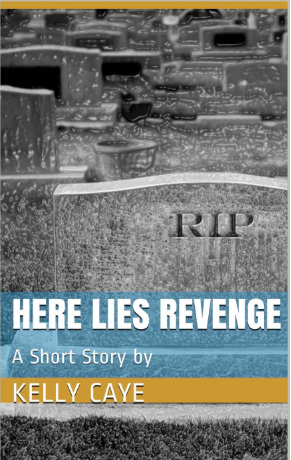
I mentioned in my last post that my twelve year-old granddaughter wrote a great short story that received a 100% in her writing class. I published it with Amazon and she will get paperback copies as a surprise Christmas gift. Here Lies Revenge is now available in print and Kindle versions. Man, I wish I had started that early.
 A scary story that will make you think twice before offending the odd girl in school


Monday, July 30, 2018

Why do my characters boss me around?


No Peace starts at del Monte Hotel in Monterey (photo circa 1880s)

In a previous post I wrote that I had started the next Steve Dancy Tale and the title of the seventh book in the series would be Coronado. I had a plot outline, a nifty cast of characters, and enough research on San Diego history to fill a nonfiction tome. Steve had other ideas. I started the story in Monterey, California, intending to travel down to San Diego by way of Redondo Beach and Pasadena. Don’t ask. I won’t tell you the storyline because I’ll probably use this material in the next book. Suffice it to say that Steve got himself into so much trouble in Monterey that he can’t go anywhere until he cleans up his mess.

Wait a minute, isn’t Steve Dancy a fictional character? Yeah, that’s what irks me. Who gave him the right to change my story? When I start a new work, I know the beginning and how it ends, but allow the characters to show me the way to get from one end to the other. Many times, I put the characters into a scene, give them a couple lines, and then transcribe the rest of their conversation. I know them so well that I trust them. But never has a character taken me off the rails and done his own thing. This is outrageous. Perhaps he’s miffed that I abandoned him for a spell to write Deluge. Hell, I thought Steve and Virginia wanted to be left alone on their honeymoon. Which brings to mind the first time I knew something was going haywire. The new book starts about two years after our newlyweds rode off into the sunset. I’m writing the first chapter and Steve and Virginia suddenly announce they have a one-year old son. I’m typing away, and suddenly Jeffery Joseph Dancy enters the story uninvited. Cute kid, though.

The bottom line is that I’ve changed the title for the book. It is now called No Peace, A Steve Dancy Tale, but who knows, it could change again. Now I have a true appreciation for what it means to have a character driven story.


One last thing; because of my recent focus on westerns, I was concerned that Deluge might not be accepted by my readers. It was contemporary, and although there were horrific gunfights, the main antagonist was a nasty storm. I’m pleased that the initial reception has been great. The ratings on Goodreads score it 4.4 and the initial Amazon reviews rank it 4.6. Thanks to all of my readers.

Gotta go. Steve's telling me to get back to work.

Sunday, March 18, 2018

Mark Twain's 10 Writing Tips


Curiosity.com published a list of writing tips from Mark Twain. Now, Twain never actually published a list, but his letters provided plenty of tips that just needed to be gathered up in one place. 


1. "Write without pay until somebody offers to pay."
2. "Don't say the old lady screamed. Bring her on and let her scream."
3. "Great books are weighed and measured by their style and matter, and not the trimmings and shadings of their grammar."
4. "The time to begin writing an article is when you have finished it to your satisfaction."
5. "If I had more time, it would have been shorter."
6. "The more you explain it, the less I understand it."
7. "Substitute 'damn' every time you're inclined to write 'very.' Your editor will delete it and the writing will be just as it should be."
8. "The difference between the right word and the almost right word is the difference between lightning and a lightning bug."
9. "Use plain, simple language, short words, and brief sentences... don't let fluff and flowers and verbosity creep in."
10. "As to the adjective: When in doubt, strike it out.”

Good advice, but I believe scrutinizing Twain’s castigation of James Fennimore Cooper provides even more guidence. Among other things, Twain wrote “Cooper's art has some defects. In one place in "Deerslayer," and in the restricted space of two-thirds of a page, Cooper has scored 114 offenses against literary art out of a possible 115. It breaks the record.” 

If the criticisms of Cooper were rewritten as positive statements, they would make a great guide to great writing. Which I took the liberty of doing here. You may also want to check out my catalog of writing advice from the masters. 


Tuesday, February 27, 2018

Leadville Laurel comments on my book Leadville

"Author/Blogger James D. Best found me on the web and sent me his novel Leadville: A Steve Dancy Tale (2nd in a series) to review! I haven't yet posted my review on my website, but I can tell you that even if I weren't living in Leadville, I'd still love this Wild West mystery adventure! Best's writing style is a romp, and he nails the dialogue. Two thumbs up!"